
The living room is where most people spend their evenings and where guests form their first impression, yet the biggest wall is often left bare or filled with a few frames hung at random. Good living room wall decor does not take a renovation. The right size, the right height and a couple of pieces with real character usually do the job. Below are nine ideas for styling laser-cut, powder-coated metal wall art, along with the measurements that make them work.
Before you start: three measuring rules
Keep these three rules in mind. They explain most of the cases where a wall looks too empty or too crowded.
- Width: Art hung above furniture should span roughly two thirds of the furniture’s width. For an 84-inch (about 215 cm) sofa, a total composition of 55 to 58 inches (about 140 to 148 cm) looks balanced.
- Height: Hang the center of the piece about 57 to 61 inches (145 to 155 cm) from the floor, which is roughly average eye level.
- Gap: Leave 6 to 10 inches (15 to 25 cm) between the sofa back and the bottom edge of the art. Hang it higher and it floats away from the furniture.
1. One large statement piece over the sofa
The simplest and most effective approach is a single wide piece above the sofa. One piece gives the room a clear focal point and keeps the wall calm. Wide, open compositions such as mandalas, trees or landscapes from our metal wall art collection suit this role well.
2. A world map for a long wall
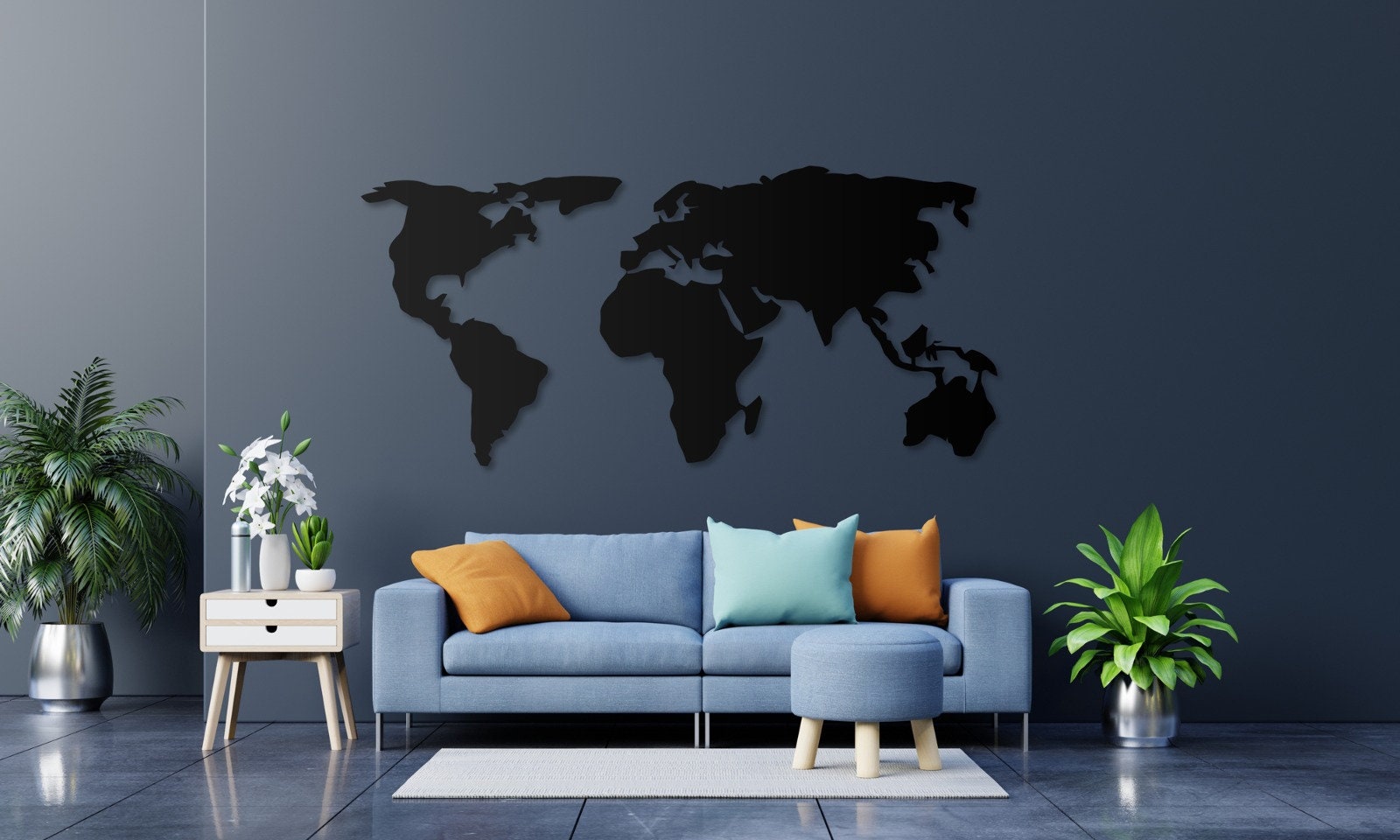
If you have a large blank wall, a world map is both decorative and a conversation starter. Its horizontal shape fits the long wall behind the sofa, opposite the TV or beside a work corner. Our world map category includes classic, compass-style and half-map interpretations. On a plain wall, the Classic World Map Metal Wall Art is an easy place to start.
3. A pair or trio gallery layout
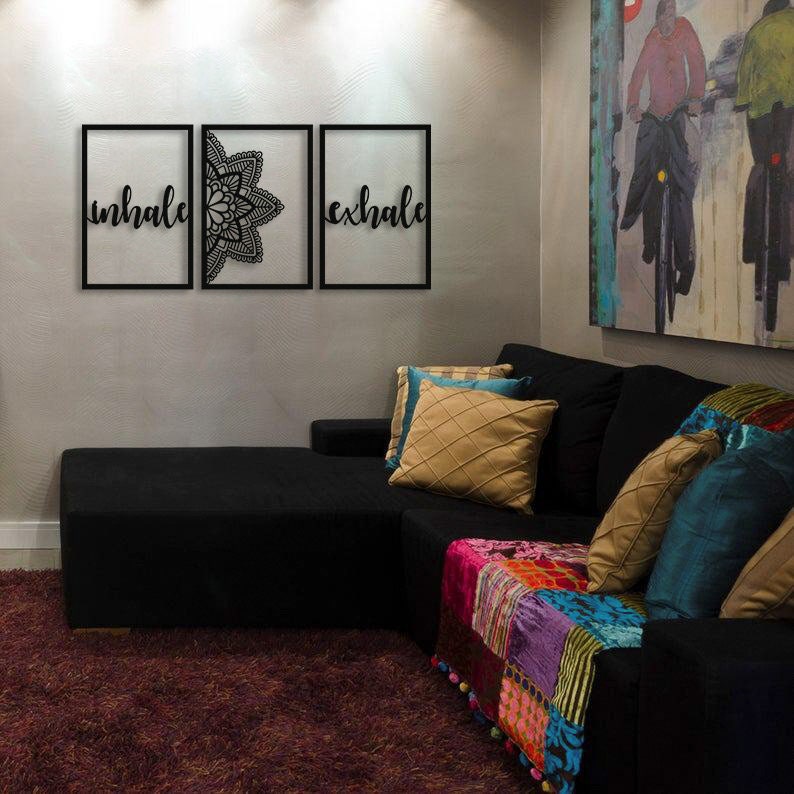
Instead of one big piece, hang two or three pieces of equal size side by side. Leave 2 to 3 inches (5 to 8 cm) between them, treat the group as a single artwork and center it at the same 57 to 61 inch height. In a trio, choosing a slightly different design for the middle piece adds rhythm.
4. Mirrored “Merror” surfaces for light
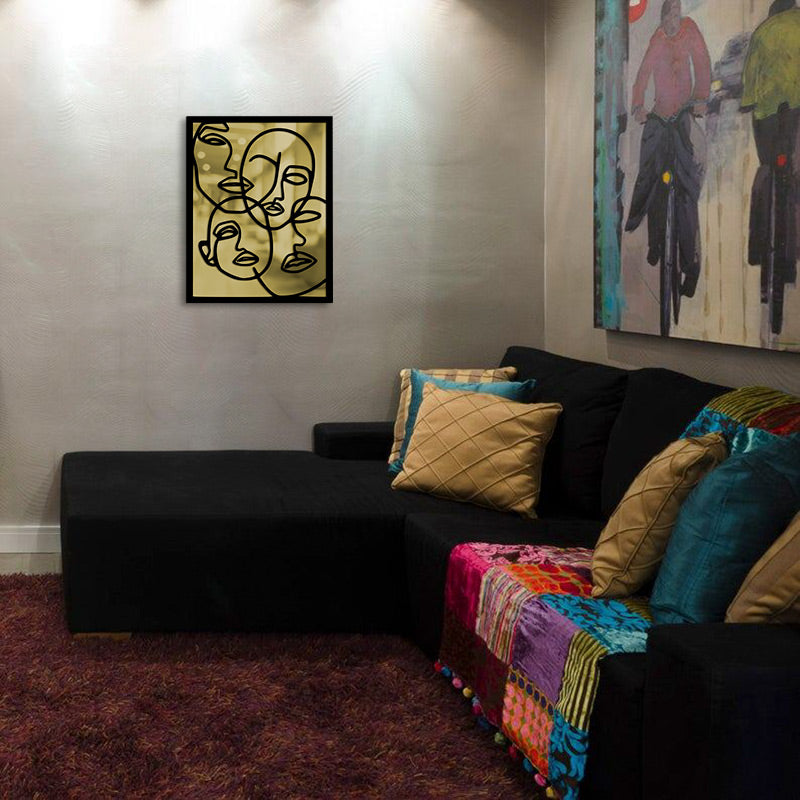
Mirrored-finish metal pieces, which we call Merror, bounce room light around in a moving way. Hung opposite a window or on a side wall, they look different throughout the day. In a small or dim living room the reflections can make the space feel a little brighter. A piece such as the Merror Face Lines Metal Wall Art is a good example of the effect.
5. Typography and motivational pieces
Lettering is a quick way to show personality. A short phrase or a single word works well on the narrow wall beside a media console or at the corner leading to a hallway. Our wall sign collection offers a range of messages. Let a lettered piece stand on its own, because too many patterns beside it will drown out the message.
6. Black metal against a neutral palette
In a living room built on beige, gray or cream, a black powder-coated metal piece creates a graphic contrast. The open, laser-cut areas let the wall color show through as part of the design, so the wall color matters: thin-line designs can disappear on a dark wall and look crisp on a light one.
7. Add lighting for the evening
Because living rooms are used mostly after dark, it makes sense to support wall decor with light. Our illuminated wall art and sconces give the wall a warm focal point once the main lights are off. Plan the cable route ahead of time, since choosing a wall near an outlet makes installation easier.
8. Pair art and a clock on one wall
A wall clock is also a decor piece. If it shares a wall with art, keep the two in related tones and styles. One can be mirrored and the other matte black, but both should lean the same way, either geometric or organic. Browse our metal wall clocks to find a size that suits your wall.
9. Vertical compositions for corners and door sides
Not every living room has a wide wall. For narrow gaps beside a door or between a window and a corner, go vertical. Two small pieces stacked on top of each other fill the space and balance the horizontal weight of the room. In tight spots, two pieces in graduated sizes look more comfortable than one oversized piece.
Practical hanging tips
Metal pieces can feel heavier than wood or paper prints, so use anchors and screws that match your wall type, whether brick, concrete or drywall. Before drilling, cut a paper template and tape it to the wall to check size and height. For cleaning, a dry or slightly damp cloth is enough. Avoid abrasive products.
Which idea fits your living room?
You do not need to try all nine on one wall. Measure your wall, pick one idea and test it with a paper template. When you are ready, browse our metal wall art collection to find a piece, made in the WiseDec workshop with laser cutting and an oven-cured finish, that suits your room.
Frequently asked questions
How high should I hang art in the living room?
Hang the center of the piece about 57 to 61 inches (145 to 155 cm) from the floor. Above a sofa, leave 6 to 10 inches (15 to 25 cm) between the sofa back and the bottom edge of the art.
What size art should go above a sofa?
The total width of the art or the group of pieces should be about two thirds of the sofa’s width. On an 84-inch sofa, around 55 inches in total width looks balanced.
Does metal wall art go with wood furniture?
Yes. Black metal contrasts nicely with the warmth of wood. The key is to limit the number of colors and patterns: if your furniture is busy, choose a simpler piece of art.
Is one large piece or several small ones better?
In small, simple rooms, one large piece feels airier. On wide walls, or if you want a more personal look, a two or three piece gallery layout has more impact.
Leave a Reply